Alles kann besser werden,
hol'n wir uns den Himmel auf Erden.
Alles soll besser werden,
hol'n wir uns den Himmel auf Erden.
Alles wird besser werden,
wir holen uns den Himmel auf Erden.
Xavier Naidoo
“sense without force”
The Neue Oper Wien performed Ernst Krenek’s opera Pallas Athene weint at MuseumsQuartier Wien.
Pallas Athene is a representative of George Herbert Mead’s generalized other, she represents the relationships of an ideal social community. Socrates shows how self-reflection can pave the way to a meta-level on which such an ideal can be reflected.
however, both Pallas Athene and Socrates are doomed to failure. Athens is populated by self-concerning individuals that use the common good as instrument for their own well-being. by doing so, they unavoidably shift away from the state of freedom to the catastrophe of Sparta’s rule of force.
Socrates reflects upon that situation with Krenek’s words: “in freedom disunited, we are powerless, united by force we are senseless; sense without force – when does such a light shine through our night?” (my translation from german: “in Freiheit entzweit sind wir machtlos, in Zwang geeint sind wir sinnlos; Sinn ohne Zwang – wann schimmert solches Licht durch unsere Nacht?”).
that’s the question of unity through diversity.
topical.
world at war
Pope Francis said: “The world is at war”, and he made clear he does not side political leaders having in mind what they frame as war on terrorism, not to speak of a religious war: “It’s a war of interests, a war for money. A war for natural resources and for the dominion of peoples“, he said (quoted in Inés San Martín, Pope Francis says the world is at war, but not a war of religions, in: cruxnow, 27 July 2016).
By that statement the pope unveils the ultimate cause of the global crisis we are facing – a cause that cannot be fought by pouring money in military measures and strengthening safety and security for one’s own homeland at the expense of the freedom of the citizens. Actually, all that has proven counterproductive. It led us deeper into the war the pope is pointing at.
One of the best analyses i ever read of terrorism in that context can be found on telepolis in german: Zwischenruf eines Blauäugigen, an article by a former judge at the bavarian administrative court of justice, Peter Vonnahme. Have a look.
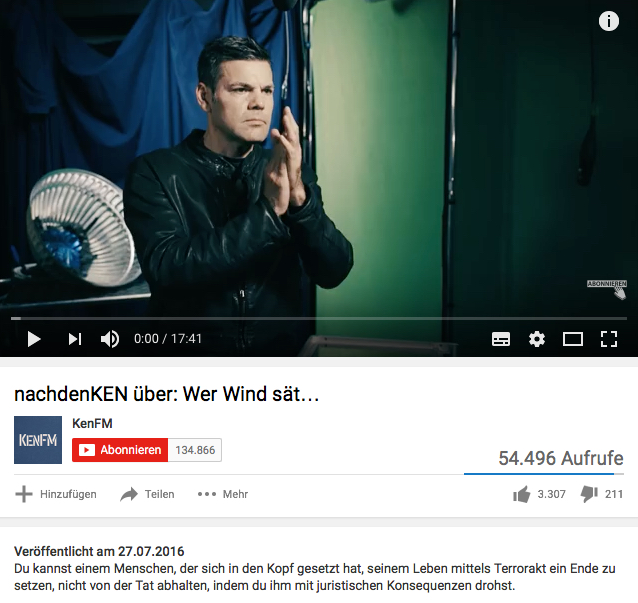
An emotional appeal for reflecting upon the causes of the terrorist attacks in the west is here: Wer Wind sät… (after the book of Michael Lüders on western foreign policy in the orient), a video by KenFM (in german too).
convivialisme and “badke” – unity through diversity
when enjoying a dance performance last saturday, i had the experience of a great confluence.
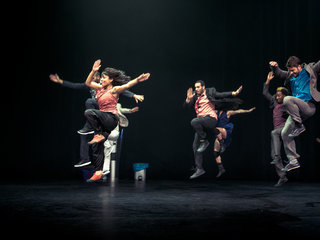
badke by les ballets c de la b, a.m. qattan foundation and kvs (photo: DannyWillems)
on the one hand, the dance performance was about the individual and the collective. “dabke” is a name for a palestinian folk dance – a line dance for weddings and other festivities, meaning stamping on the ground with your feet in a collective way. choreographers Koen Augustijnen and Rosalba Torres Guerrero from belgian les ballets c de la b and dramaturge Hildegard De Vuyst from belgian kvs questioned the role of dabke in the context of the israeli-palestinian conflict. they put the question to palestinian dancers and artists. the outcome is baptised “badke” – something new, “the creation of something self-contained but nevertheless referring back to a shared tradition – that is close to the collective element that is close to or inherent in traditional dance but which still alienates it”, as the programme description says. “It is a dance of collective physicality, but also of self-determination; a dance of solidarity and belonging, in which everyone nevertheless stands and counts for themselves.” you can watch that transformation by the inclusion of elements of modern dance, hip-hop, capoeira and artistic dance. ”The addition of choreographic components from other fields of movement and cultural contexts tells among other things of the desire to be part of a global culture. Through deconstructing traditional dance with the simultaneous adoption of its original social function – the collective – and the introduction of global components the dance charges itself with new content and so acquires a socio-political relevance and explosiveness.”
it’s an expression of a will to live and of a lust for life – it’s a model for conviviality.
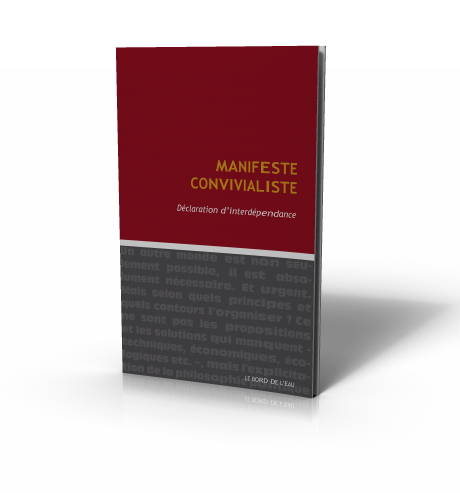
for, on the other hand, le manifeste convivialiste, déclaration d’interdependance, which i had signed two days before, das konvivialistische manifest, für eine neue kunst des zusammenlebens, is just about the same. it is about living together, in peace, and in freedom. about 40 french intellectuals, coming from different backgrounds like Edgar Morin or Chantal Mouffe, held a discussion for years and agreed to publish that manifesto. it’s a plea for a dynamic balance between individualism and collectivism, for the right of the individual to compete with others as long as it is not detrimental to the collective.
so the dance performance (which abstained from allegations or presenting cruelties) could perfectly well illustrate what “convivial social relationships” are meant to stand for.
“be the systems you want to see in the world”?
for this year’s emcsr we made in facebook a t-shirt competition to find the best slogan. people could make suggestions. the one with the most likes made it onto the t-shirts for our staff and for those who wanted to buy a souvenir.
i put the t-shirt on too. however, it’s not completely to my taste. it seems to lay emphasis on individual change which is hard to accomplish, given constraints by the system we are all part of.
it is that very system we need to change. and as soon as we agree to that, we – as individual systems – change our minds and do already the first step to change the overall system and anticipate another system. in this struggle, we co-evolve with the system we want to see in the world. that struggle is not against certain individuals but, in the first place, for a change in the structure of society that we do not deem fair because it allows members of society to take roles and positions by which they can exclude other members from the production of and the provision with commons. that struggle is not for us to take over the power. and, for certain, it is not a struggle with ourselves to make us apt to the unfair relations in society.
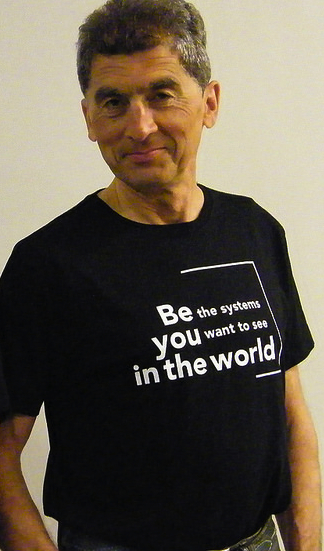
Dino Karabeg, a participant of the emcsr 2014, showing the t-shirt (photo: emcsr)
– p.s. 12.5.2014. for the sake of completeness: last weekend i came across the following poster in a swiss protestant seminar hotel:
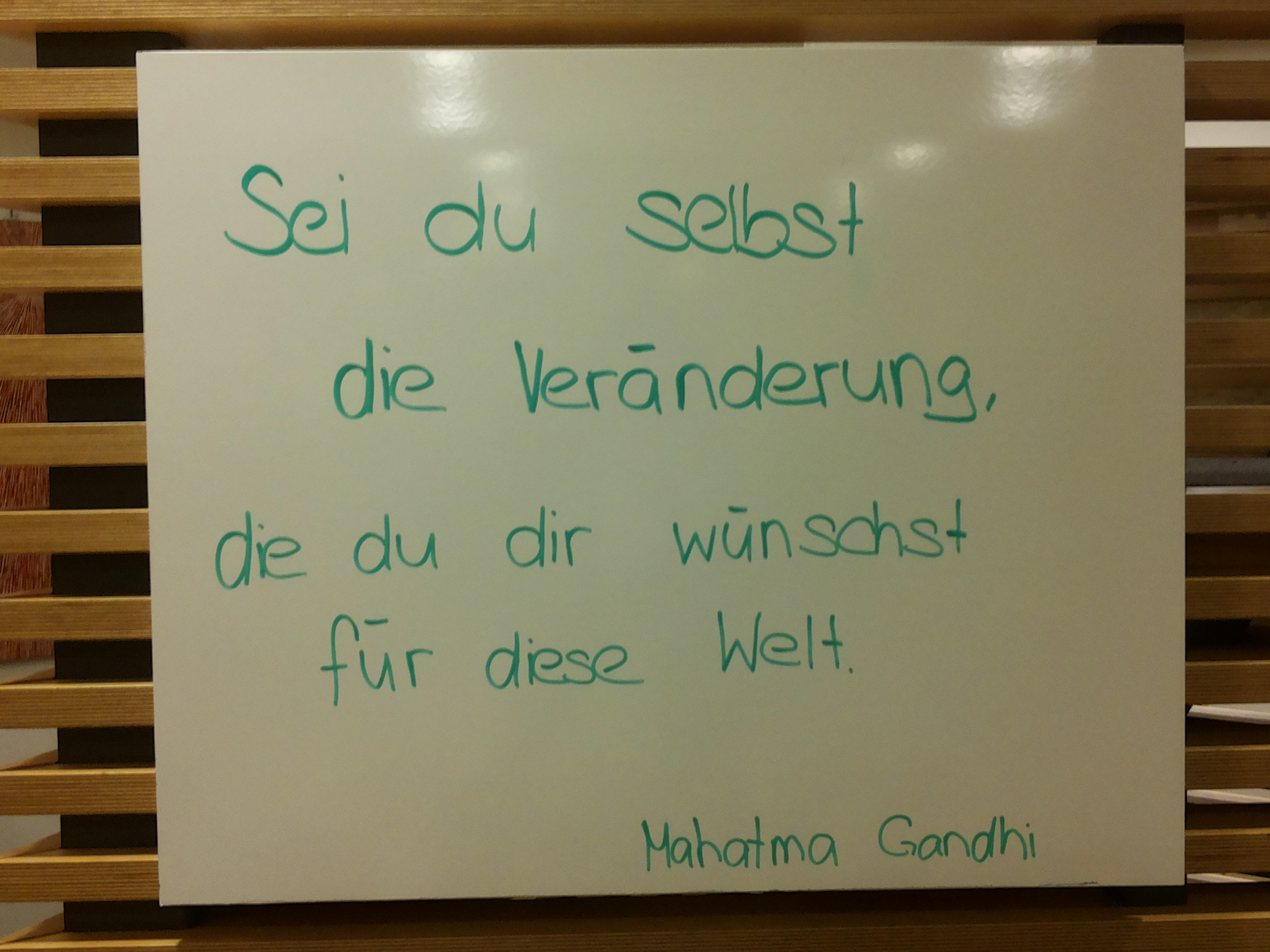
(photo: Lisa Schlager)
it means roughly “be yourself the change you wish for the world”, paraphrasing a quote that is attributed to gandhi. notice, however, the dispute: http://www.elephantjournal.com/2011/08/be-the-change-you-wish-to-see-in-the-world-not-gandhi/
why freedom of information is not enough – communication for co-operation
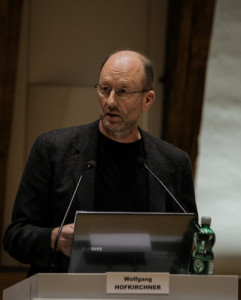
plenary address to the international conference “freedom of information under pressure. control – crisis – culture”, tu wien, 28 february – 1 march (photo: Edward Chapon)
A week ago I watched a ballet. Martin Schläpfer choreographed for his dance company “Ballett am Rhein”, amongst other pieces, “Ungarische Tänze” (Hungarian Dances) after the music of Johannes Brahms. It was performed at the Festspielhaus St. Pölten.
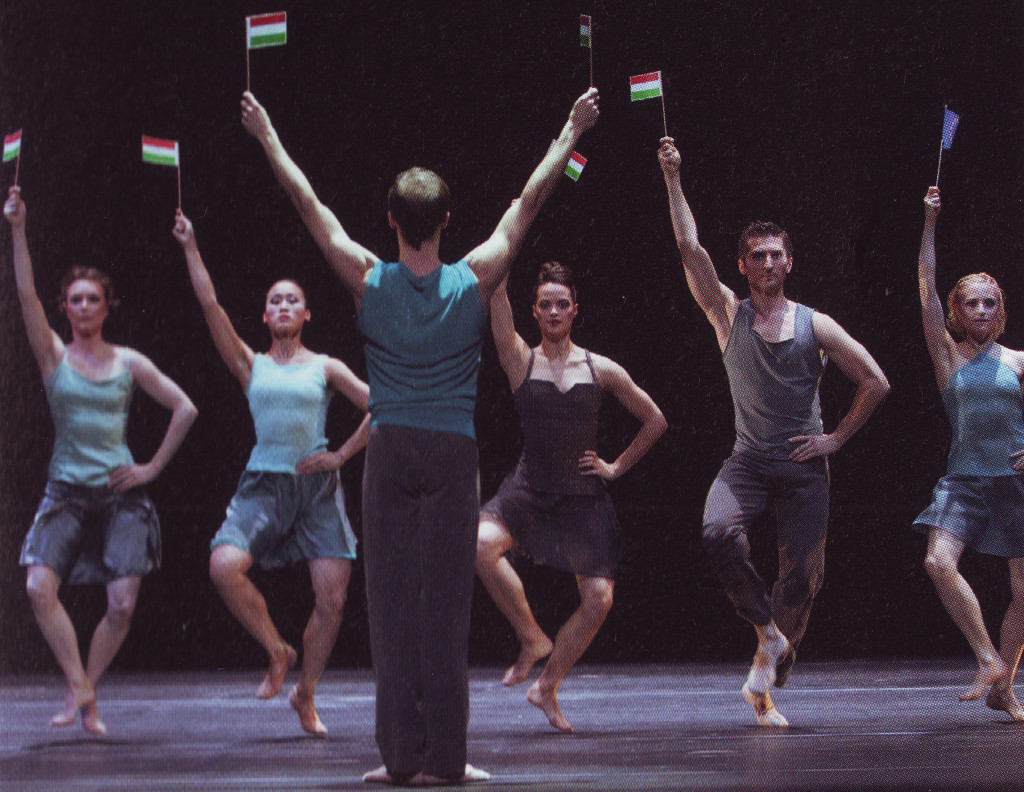
(photo: Programm/Ballett am Rhein, Festspielhaus St. Pölten)
One of the dances related to the freedom of press. I’d like to tell you the story line that was presented by the dancers against the background of Brahms’ pathetic music, which turned the performance into a persiflage: first, a man with a newspaper is barred from reading it, he is fettered by a woman with a rope and, finally, dragged off the scene; then a kind of cheerleader appears who waves two flags; later on, he teaches flag-wavers who neatly line up in a row; however, as you can see on the right of the picture, one dancer performs with the flag of the European Union, whereas everybody else has a national flag – the flag of Hungary, of course; what happens then is that the lead dancer replaces the flag of hers with the “right” one, pops the “wrong” flag into his buttocks and exits.
In my interpretation, this criticism of the restrictions of the freedom of press by the Hungarian government is a wonderful metaphor for an answer to the question “Why is freedom of information under pressure?“.
The answer that is given, is: there are some interests interfering with the generation and utilisation of some information, because that information contains or supports values that are different from, or opposite to, the values that are needed to justify the pursuit of those interests. That is, there are conflicting values because there are conflicting interests, and there is at least one interested side that exerts power to solve the conflict in a one-sided way – by establishing public consistency of all values with their interests and eradicating the informational basis for the promotion of incompatible values. The side in question may be in power or may seize power in cultural, political, or economic terms.
Moreover, in our example, it is a national interest (the Hungarian one) the values of which turn out nationalistic when going to outbalance and override values of inter-, trans- or supranational interest (the EU ones). To generalise, it is always a particular interest implying particularistic values when attempting to dominate universal ones; it is always a part being or becoming partial when having usurped a whole or when rebelling against a whole, it is always a worm’s-eye view that it attempts to impose when not minding what a bird’s eye view could be for the sake of all affected.
If this is so, then freedom of information is seen in a different light. That is, freedom of information is under pressure, if and when the public sphere is instrumentalised to serve one part of competitive interests rather than addressing and expressing the interests of all in a co-operative discourse.
Why am I stressing this? There are three reasons for that:
- First, human communication is from the outset co-operative.
- Second, in the course of history, communication has become ever more idiotic.
- Third, given the current societal conditions, freedom of information is not enough.
First, human communication is from the outset co-operative.
According to anthropologist Michael Tomasello, our great ape ancestors were social beings, but “they lived mostly individualistic and competitive lives” (2014, 4), they were “individually intentional and instrumentally rational” (30) as great apes are still today. Early humas began to speciate not until they took advantage of going beyond “individual intentionality” and adopted “more complex forms of cooperative sociality” (31), which made them achieve shared goals and brought about “shared intentionality”.
Tomasello hypothesises a first step towards shared intentionality “in the context of collaborative foraging” (33), that is hunting of large game and gathering of plant foods, around 2 million years ago and culminating 400.000 years ago. Multiple and vanishing dyadic relationships formed in which early humans shared a joint goal, understood their individual role and could take the perspective of the other. In order to support the negotiation of the joint goal and the coordination of collaboration, human communication originated with “a commitment to informing others of things honestly and accurately, that is, truthfully” (51).
The second step is that from early to modern humans who became “thoroughly group-minded individuals” (80) in larger groups, in which they “had to be prepared to coordinate with anyone from the group, with some kind of generic other” (81) some 200.000 years ago; “the individual no longer contrasted her own perspective with that of a specific other…; rather, she contrasted her own perspective with some kind of generic perspective of anyone and everyone about things that were objectively real, true and right from any perspective whatsoever” (122). For Tomasello, the anthropological sense of communication is co-operation.
Second, in the course of history, communication has become ever more idiotic.
Evolution did not take a linear way. The first groups were tribes. Greek antique civilisation ushered in another stage of social formation, deserving the name “idiotism”, which I borrow from Neil Curtis (2013), author of a book with the same title. Etymology shows, “idios” meant in Greek Antiquity “the personal realm, that which is private, and one’s own” (12). In Curtis’ view, “idios” bears also the stamp of “being enclosed”. He says that “the creation of the private through the enclosure of public or commonly held resources has historically been the primary means by which property has been secured for private use” (12). By the term “idiotes”, then, a person was denoted that is concerned with his personal realm only, with his own, and not with, say, the res publica and the fate of other human beings. Curtis convincingly demonstrates that neoliberalism, not only in ideology but also as a distinct social order, epitomises the principle of the “idiotes”. Hence “idiotism” as signifyer of our current society. However, “idiotism” as a feature of society that functions via self-interested, self-concerned individuals goes, in fact, back to social formations in which domination appeared – the institutionalised instrumentalisation of humans for one’s own interests, which goes hand in hand with the enclosure of the commons and the denial of free access to the latter. Global financial capitalism is just carrying idiotism to extremes. It originated, when selfish “I”s, after having disguised themselves as incarnations of the tribal “We” overtly entered the stage of heteronomic societies. The actors have become self-regarding persons of their own rather than other-regarding and thinking is short-sighted and does not take into consideration harmful effects on other parts of the system; competition has been prioritised on the higher levels of society over co-operation, which is reserved for the lower levels only.
Communication is for co-operation only, if and when it serves overall competition.
Third, given the current societal conditions, freedom of information is not enough.
The Hungarian dance example shows us:
- in the event of crises, pressure comes overtly: the lead dancer makes use of his power to take away the “wrong” flag – like in Greece, as our Greek colleagues testified yesterday;
- but in normal times, as long as there is one “wrong” flag only among a legion of “right” ones, pressure comes in the disguise of plurality when professional media journalists, for reasons whatsoever (because they experience soft pressure, as Harald Schumann indicated yesterday; or because they have no time any more to analyse what they report and comment, as Susanne Scholl indicated yesterday, and rely on obscure sources like p.r. agencies or follow their own prejudices, if they aren’t willingly partisan), contribute to the forming of a mainstream that camouflages its partiality by pretending to be everyman’s opinion, which makes itself a self-fulfilling prophecy; this process of ideological phasing – „Gleichschaltung“ – works as underlying process in times of crises too, as colleagues from Greek evidenced yesterday; and the blogosphere is, in principle, no exemption.
What is needed today, is another leap in anthroposociogenesis. Biological reductionists try to tell us that the nation state is the highest level of grouping for which we are made by our genes. However, if we don’t come to terms with the fragmentation, heterogenisation, disintegration of our societal build-ups, we will face extermination. Thus let’s be optimistic: our species had already accomplished a major transition to a more co-operative social life.
What is needed today, is a unity-through-diversity build-up of nascent world society all levels up and down. Such an edifice needs to be based upon the diversity of individuals, serving their true and best interests by acknowledging that they can do so exclusively when in harmony with the overarching system and thus without doing harm to other system components; actors need to be capacitated to reflect their own position and the position of others from the perspective of the overall social system. And, in principle, we are already endowed with such a capacity.
What is needed today, is communication for co-operation. The current state of mediated communication is a big obstacle on the way to a “global sustainable information society” (Hofkirchner).
Freedom of information, the plurality of opinions, is just a necessary condition to enable social systems and their actors to get ready for the transition required. Freedom of information is a precondition, but not the end.
using Robert Rosen’s modeling relation for understanding systems practice
in Cómpeta in Spain where i recently took part in a conversation between systems engineers and systems theorists, the basic question was touched: what is systems practice? what is the relationship between systems science and systems engineering?
my answer to that is: humans stand in practical relations to real-world systems, as they face problems when being appetent in the face of systems that afford being treated in specific ways only to facilitate desired outcomes. systems science is the scientific way of understanding systems and understanding systems has one practical aim: to guide practice. systems engineering as well as systems design as well as systems management and whatever is the name you give to those activities that build upon the knowledge of systems and builds up technological knowledge, that is, knowledge that transforms the knowledge of systems into knowledge of how to intervene in the systems such that those interventions yield desired outcomes – all these activities belong to systems science. technological systems knowledge is just one part of the overall systems endeavour. together with empirical and theoretical systems studies it forms part of a bigger whole, the systems science(s), irrespective of whether or not any part is aware of that. systems technology is the praxiological part of systems science, while systems thinking in theoretical terms is its ontological part and the methods of investigating systems are its epistemological part. altogether they contribute to the scientific change of real-world systems. and the better they are aware of each other, the better they reflect their role in the edifice of science, the better they connect to each other, the better will the science-based outcome of societal intervention be.
Robert Rosen is famous for his modeling relation:
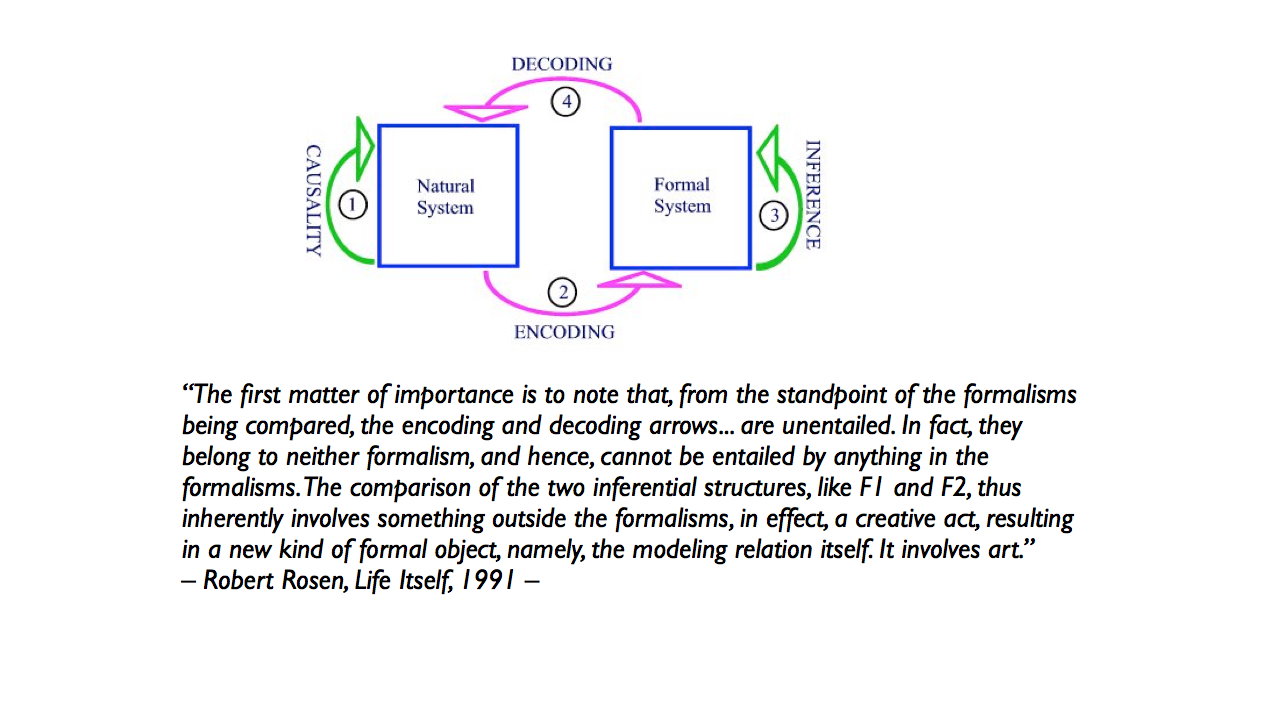
what i’m doing is to specify Rosen’s natural system as real-world system whatsoever and specify his formal systems as systems science that models the real-world system; to specify Rosen’s encoding as systems understanding and his decoding as systems intervention; the whole loop then becomes systems practice.
i add the three layers of science referring to aims, scope and tools: the uppermost layer represents the context of application, of “adding value” to the model, which is the level of technology (that’s praxiological knowledge); the next layer represents the justification context in which scientific knowledge is exposed to critique (the exposure to critique and making judgments about the result of this exposure is as well praxiologically instigated but focused on the ontological perspective of science); the bottom layer reprsents the context where discovery is made and includes gathering of empirical data (which itself has a praxiological aspect but is specified here in an epistemological context):
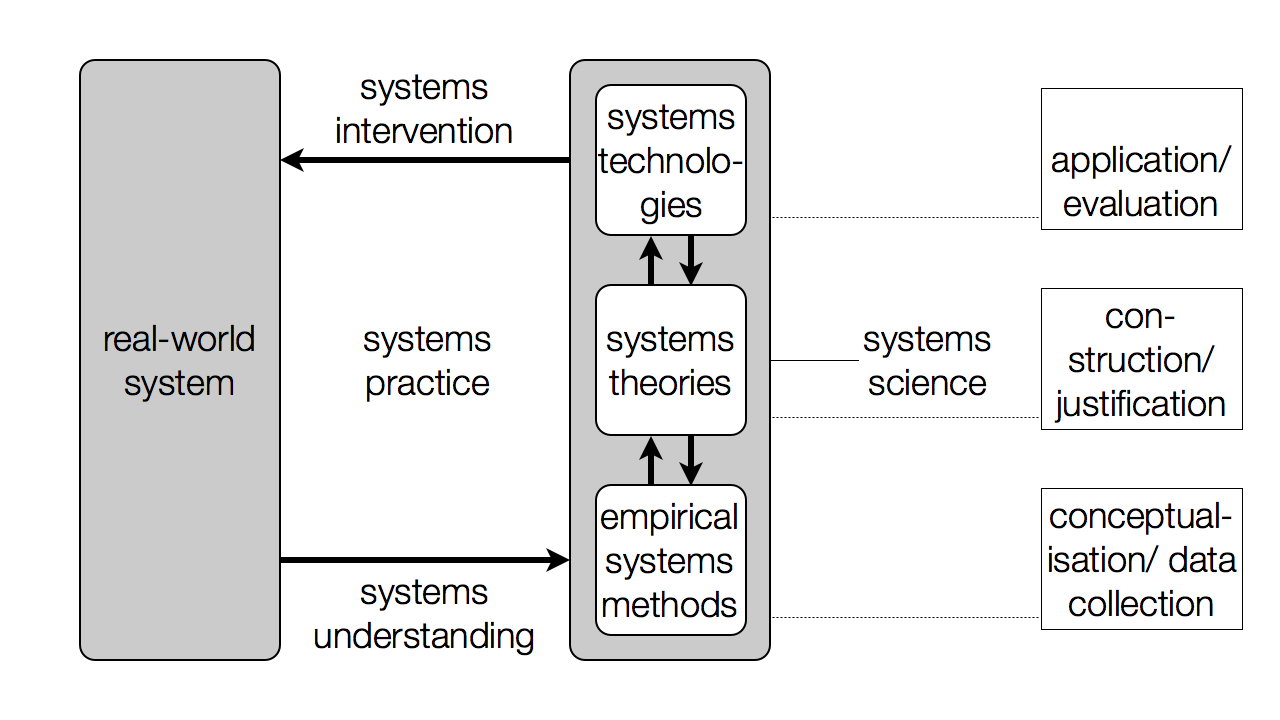
now, not only are systems understanding and systems intervention societal (social, human) activities that cross spheres of different qualities and thus inextricably inhere emergence; but also within the modeling activity, the systems science on the right hand, there are leaps of quality when transgressing from one layer to the other and ergo are no logically, mathematically, algorithmically compelling entailments possible in its entirety. simulations etc. are only subordinate parts in the emergent modeling process of science (including technology).
alphabet
there is another austrian film-maker who belongs to the same kind of people mentioned in the previous post. his name is Erwin Wagenhofer and the title of his recent film is “alphabet“. it forms the final part of a trilogy after “let’s make money” (2008) and “we feed the world” (2005).
it’s a fundamental critique of the current form of education systems globally imposed on developed and developing societies. pupils are trained for functioning in a social order in which what counts in the end is money; in which they are expected to outperform their competitors; and in which they are socialised to regard their schoolfellows as competitors. they aren’t educated in the broad antique meaning of the word “education”. they loose their creative capabilities. they are trained for becoming “idiots” (see my post on “idiotism”). already in the first minutes of the film i was absorbed when watching the report on china in which the modern individualistic schooling system collides with the traditional culture of collectivity.

website of the film
when i watched the scenes showing executive education i was heavily reminded of the youngsters me and my colleagues at the faculty of informatics seem to select during the measures we have been taking since 3 years to reduce the number of students in order to increase the quality of teaching. those freshmen-to-be are forced to promote themselves, to be self-regarding, and they will, in addition, learn to compete against each other due to the study restrictions we impose on them through knock-out exams in the first semester. those are not the students our university would need for producing “technology for humans” as our vision says on the facade of the building where i had my bureau. we rather make ourselves accomplices in the destruction of an education we would need for the betterment of social conditions.
against the overpopulation myth
it’s a good thing that film-makers step in when mass media journalists don’t do their job but multiply ideologemes instead. Werner Boote, a vienna resident, is one of them. he is well known for the fim “plastic planet” in which he reports aubout the dangers plastic poses to our biosphere. when confronted with opinions that there are too many humans on earth he decided to make a new film: “population boom”.
that film is a plea for humanism. it provides a systemic answer: it is not the number of people but the way how the social systems we are part of make us relate to each other – are we conditioned to seek for short-sighted self-regarding aims or are we allowed to care for each other?
that film is an example for how systemic thinking can deconstruct deep-rooted wrong beliefs that inhibit proper solutions.

the music video “reach out” (click on the snapshot)
why another journal on systems?
better late than never the journal “systems. connecting matter, life, culture and technology” put its first issue online. the Bertalanffy Center made it possible.
what is different about that journal is that it aims at providing a platform for self-reflection of the systems movement and its plurality of approaches, schools, theories, concepts, application fields etc., whether or not they have “system” in their designation (cybernetics, evolutionary theory, sciences of complexity etc., revolve around the systems concept). it’s a platform for enhancing the discussion between all these strands about their fundamental ideas and about their impact on society.
it is my deep conviction that thinking in systems terms is the best way of thinking transdisciplinarily, which society needs to cope with the global challenges.
the journal was founded during the preparation of the emcsr 2012. when the title of the new journal was to be found, we came across another journal the title of which perfectly seemed to suit our purposes: ”Systems: Journal of Transdisciplinary Systems Science”. that was the journal of the Polish Systems Society. but it stopped production in 2007 when the then editor-in-chief and president of the society, prof Myeczyslaw Bazewicz from the Wroclaw University of Technology, passed away, as we had to learn. thus our journal is, in a way, in memory of this predecssor. it resumes its tradition to emphasise transdisciplinarity.
my friend Shu-Kun Lin from the enterprise mdpi had a very similar idea. he and me had some negotiation on whether or not to combine efforts. yet there was a difference in the respective business models. his journal is open access too, but they levy article processing charges which is only waived for the start of the journal (so for the journal “information” that has left its first phase behind it is now 300,00 chf). our policy is to have our journal free from author fees.
the first isse contains papers of the emcsr 2012.
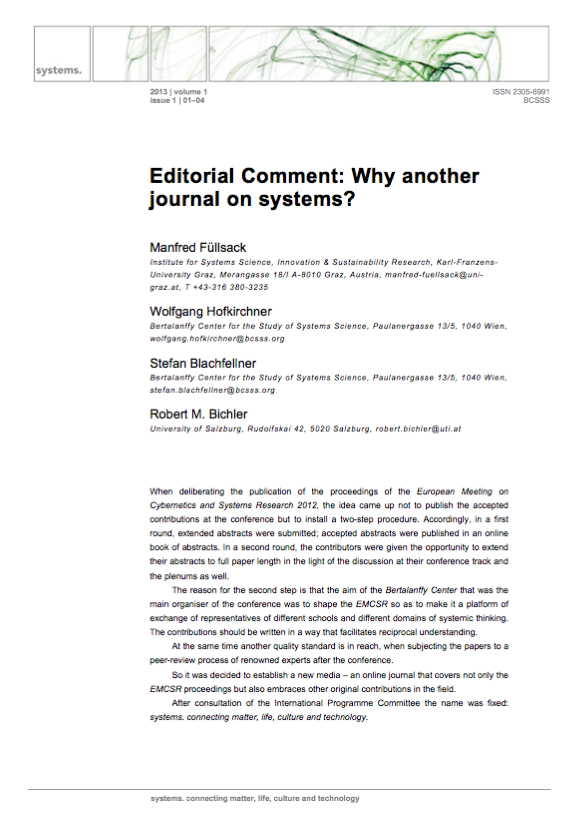
editorial of issue 1, volume 1
idiotism

book cover
some weeks ago i read in an Austrian newspaper the comment of Peter Moeschl, a former surgeon and now cultural critic, on the state of democracy in supposedly advanced societies. in that comment he made reference to the etymological origin of the term “idiot” i was not aware of. i was so intrigued by the greek meaning that i googled the term “idiotism” and i found the book by Neal Curtis titled “idiotism – capitalism and the privatisation of life“.
“idios”, so Curtis, meant “the personal realm, that which is private, and one’s own” (12). in his view, it bears also the stamp of “being enclosed”. he says: “the creation of the private through the enclosure of public or commonly held resources has historically been the primary means by which property has been secured for private use” (12). “idiotes”, then, denoted a person that is concerned with his personal realm only, with his own, and not with, say, the res publica and the fate of other human beings.
Curtis convincingly demonstrates that neoliberalism, not only in ideology but also as a distinct social order, epitomises the principle of the “idiotes”. hence “idiotism” as signifyer of our current society.
i would go even further. “idiotism” as a feature of society that functions via self-interested, self-concerned individuals goes, in fact, back to antiquity and earlier social formations in which domination appeared – the institutionalised instrumentalisation of humans for one’s own interests, which goes hand in hand with the enclosure of the commons and the denial of free access to the latter. global financial capitalism is just carrying idiotism to extremes.